
 Apple Podcasts
 Spotify
 iHeartRadio
 Amazon Music
 Audible
 Castro
 TuneIn
 RSS Feed
What is Dripping in Black?


In this episode, Talaya Dendy, a cancer doula and survivor, shares her journey and insights into the world of cancer support. She discusses the importance of self-advocacy, emotional support, and holistic healing modalities like mindfulness, yoga, and Tai Chi. Talaya also highlights the challenges of cancer survivorship and the need for personalized care and community support.
Connect with Talaya Dendy
Show Page: https://www.drippinginblack.com/talayadendy
Mr. Al Pete: https://www.mralpete.com/
All things Dripping in Black: https://www.drippinginblack.com/
DiBk Drip Shop: https://www.dibkdripshop.com/
Dripping in Black Productions: https://www.dibkproductions.com/
Timestamps are not accurate
What is Dripping in Black?
What is dripping in black? It is black excellence. My name is Talaya Dendy and I am a cancer doula.
Interview
Mr. Al Pete (00:02.171)
Good day, good afternoon, good evening, my people is Mr. Al Pete from the mighty MPN network. Thank you so much for hitting play and joining us again. We are season six of dripping in black podcast and productions with dripping in black productions. Thank you so much again, again and again. I am one of the guest hosts and it's going to be multiple, uh, multiple hosts on here, but it's going to be the same type of black excellence that we give every single time on these episodes. All right.
So a couple of announcements before we get started. Go to drippinginblack.com. Make sure you bookmark that thing and make sure that you visit it. And so you can watch all the interviews from the past and the present and the upcoming ones that we'll be dropping on there. So make sure you go to drippinginblack.com. And while you're there, make sure you go to the drip shop. So that's D-I-B-K drip shop.com. Or while you're on drippinginblack.com.
It's a tab on the top that says D.I.B.K. Drip Shop. Go there and get some T-shirts, some mugs, et cetera. The holidays is around. It's always a holiday around. So make sure you just buy it for just because or you want to give a gift. makes a great stocking. Whatever you whatever you want to use it for, just go to the drip shop and purchase something and make sure that your folks are in the in the know. All right.
And lastly, please make sure that you subscribe to the YouTube page so you can get those videos and get notifications when the video appears. All right. And share it as well. Share it with your friends. Share it with somebody that you think will enjoy it. It's great by excellence right here over here in the dripping black family. All right. So without further ado, we're going to get into it. We have a great guest that we're about to interview. All right. Read up on Mr. Leah Dindy.
She's the founder, cancer doula, cancer thriver, and a podcast host. So imagine facing cancer with greater emotional strength, unwavering confidence, and the support needed to navigate the healthcare system effectively. Talaya Dendy is a season, I'm sorry, a season 14 year cancer thriver and board certified patient advocate. As a cancer doula, she offers empathetic.
Mr. Al Pete (02:22.587)
expertly inform support, guiding individuals and families through the emotional burdens and complex healthcare system of a cancer diagnosis. And she's a 2025 Bush fellow, an Air Media New Voices Amplified 25 fellow, and a 2025 Cancer Health 25 Patient Advocate. Talaya how are you today?
Talaya Dendy (02:46.091)
I am good. How are you doing?
Mr. Al Pete (02:48.143)
doing good. I'm doing good. Thanks for being taking the time to speak with us about the great things that you have going on. So I want to start with the doula part. recently been hearing the word doula like a lot. This you know in different sectors even online and I know some people that have gotten into that. Could you break down?
Talaya Dendy (02:50.094)
Okay.
Mr. Al Pete (03:12.833)
what specifically what a doula is and you know you can roll into the cancer doula aspect.
Talaya Dendy (03:19.736)
Sure. So in a very basic form, a doula is someone who supports another person through a major life change or significant health related experience. So initially when I started doing this work, I was calling myself a cancer coach and coaching is not what I do. What I do is I walk with people throughout their cancer journey and provide emotional support to them.
And so about six months after getting into this field, I said, I want to call myself something different because there's coach this, coach that everywhere. And I really just started researching the word doula. And I said, yeah, major life change, significant health related experience that is related to what I do. And so that's why I call myself a cancer doula. Now,
The work that I do is something that I created for myself when I was going through cancer.
Mr. Al Pete (04:24.533)
So, cancer survivor. so, I know that what that's, that was a blessing. So, so I kind of look at it as like, you know, you said, you know, you don't coach, but essentially you're an advocate.
Mr. Al Pete (04:52.803)
So does that involve the emotional side and the, I guess the business aspect of it, or is there certain sectors that you only have focus on?
Talaya Dendy (05:05.432)
So in terms of a cancer coach, a cancer doula, at least what I do, I provide emotional support. I'm also an advocate for the person who's going through cancer. I also provide guidance on communication, helping them to understand their treatment options, better communicating with their family, their employer. So just a host of things that people typically bump up against or have to overcome.
Mr. Al Pete (05:12.123)
Mm-hmm.
Talaya Dendy (05:34.538)
in order to get through cancer. You mentioned something about business and I'm not really sure where you were going with that part of
Mr. Al Pete (05:43.995)
Yeah, I mean, I would think the... I guess when I say business, I guess I can take that back. I'm thinking more like the terminologies. You when you're in the doctor's office, the doctor is always throwing a word that you don't understand. you know, when we talk to these doctors sometimes, they just throw out these terms and...
these thoughts or whatnot, and it is something that we just really can't understand, especially being the fact that majority of the time we go in there, we're like emotionally driven anyway. So we're already filled with this emotional stuff. And then you come with this technical technological stuff, which kind of overwhelms that person more. So I understand this, the emotional part. I'm very tapped into that. And I think that's great that
you're able to provide emotional support for somebody going through that trouble in time. But I was wondering if there was a sector where you bring in the fact of, well, you might not understand what he's saying. This is what he's saying, or this is the things that we need to watch out for, cetera. So I mean, I don't want to say legal, but yeah.
Talaya Dendy (06:57.654)
Yeah, so that is a big part of what I do. And that's where the advocacy piece comes in. That's advocating for someone. And so typically I don't really go into the doctor's office with my clients unless they're local and in unless it's something that's really, really needed. They're really struggling. Everything that I do with my clients is online via Zoom. Or I also have a HIPAA compliance software that I use.
Mr. Al Pete (07:04.091)
guys.
Talaya Dendy (07:27.7)
So in terms of what you're speaking about, really the client brings back to me what the doctor has shared with them, or the client will give me access to their MyChart or whatever electronic health record that they're utilizing. And we will talk about it first. If needed, I can step in and be a voice for the client and talk directly with the doctor, but I have to get their approval first.
Mr. Al Pete (07:36.901)
you
Talaya Dendy (07:56.246)
So a big part really is about understanding what is being shared with them in terms of their health and in terms of just their treatment options and how to navigate the healthcare system. You know, what doctor do you need for what? Making sure that my client and also their family know how to speak up for themselves and really be very, very transparent about what their needs are.
And so that can look different for every person, for each person is different. Some people are more well-versed in the healthcare terminology and how to navigate. And some people, they've never had to really do much in terms of navigating the healthcare system. So it really depends on the person.
Mr. Al Pete (08:48.397)
Gotcha. I'm going to ask, I guess, a naive question. Forgive me if it comes off naive, is it? Well, OK, I'll just say the statement. It don't seem like. Doctors would like still you wrong.
in a situation like this when it comes to, you know, like, I mean, any type of procedures or like when it comes to healthcare, et cetera, but is it that rapid that there's a possibility that, you know, misinformation can come in to where you have to step in and say, hey, and then be the advocate. I would just say that the doctor would just be kind of straightforward and understanding, but.
I don't know, it just seems like a, it just seems, and maybe I'm in a fairytale with that, and I would like for you to clear that up for me, but it seems as if, you you have this situation, the doctor talks to the patient, and the patient understands as much as possible, but there might be a procedure, or there might be something where the doctor is saying something that might be misinformation or.
you might think, okay, well, you might need a second opinion on this. And then that's when you come in. Like, it, is it rampant like that? To where, does it happen often? To where you have to step in and say, hey, let me be the advocate of it. Or am I looking at it a little bit differently or too deep?
Talaya Dendy (10:21.612)
I think you're looking at it a little bit differently because it's not about misinformation. It's about what you said in terms of getting a second opinion. It's about the patient understanding their rights. It's about the patient getting the kind of care and treatment that they want in need. There are so many stories from, don't care what race you are, from Black, white, I've supported all different kinds of races and there is
Mr. Al Pete (10:24.347)
You're right.
Mr. Al Pete (10:30.906)
Mm-hmm.
Talaya Dendy (10:51.688)
this issue where many people feel like they don't have a voice when they go in, you know, they're diagnosed with cancer and they're told, here's what we're going to do. And the patient, the client doesn't realize that, hey, I have options. I can go and get a second opinion. I can say, hey, that does not work for me. What else is available? And so it's not always about misinformation. It's about
having something imposed on you that number one, you're really not sure what it is or how it's going to benefit you and number two, it may not be something you even want to go through. A great example is a lady who was told that she had to have chemotherapy and radiation. She is a breast cancer survivor now, but she was told that she had to have chemotherapy and radiation. She said she didn't want to do chemo.
and she laid out all the reasons why she did not want to do chemo. And at first they were very adamant about her having this chemotherapy. And finally, she stood her ground and then they switched it up and said, well, there's something else we could possibly do. And so it comes down to that education. It comes down to that advocating for yourself. She was a great advocate for herself. So she was able to get a different form of treatment.
So it's not so much about misinformation. It's about making sure that your needs are heard and met. You're being treated with the utmost respect and you understand what your options are. And so a lot of times between the patient and the healthcare provider, there may be a breakdown in communication. Some patients they go in and they feel like,
They just have to sit there and have whatever the healthcare team says done to them. And it's like, no, you have options. And so that's what it's really about is just making sure people have that emotional support, the education that they need to make informed decisions, that they are able to effectively communicate with their healthcare team, that they're being treated with respect. And so there's so many different things involved in it all.
Mr. Al Pete (13:16.355)
Okay. Well, I appreciate you clearing it up for me. Maybe I know when I go into these, well, when I, me personally, when I go into the dot, I just feel like the doctor is giving me this one shot deal. you need to do, like you gotta do this. And there is like no room for, you know, another option or whatever the case would be. And I've heard plenty of stories about.
you know, people get in second, third opinions and whatnot, but you would just think that the doctor would just be like, Hey, you know, you know, this is what's going on. Here's option one option, two option, and three. It just kind of baffles me sometimes to hear that doctors would be like, well, this is what you need to do without having a second opinion or even understanding what that person might be feeling at the time. So yeah, it's it's just weird. Like that's why I asked that question. I appreciate you clearing it up for me.
Talaya Dendy (14:03.64)
Yeah.
Mr. Al Pete (14:08.791)
And it definitely, I mean, your position is definitely respected, but it definitely makes me understand more like that, how important that is, because when you walk through daily life, a lot of people just don't know that they even have options to do anything. And I think when it comes to the health system, or the healthcare aspect of life, I feel like that's like extremely important. So.
Talaya Dendy (14:28.718)
Yeah.
Talaya Dendy (14:36.376)
Yeah, especially now with the way that healthcare is going. you know, a lot of people don't even know what questions to ask to begin to advocate for themselves. And so that's another part that I do is making sure that the client understands and knows what questions they should be asking to set the tone. You know, I always tell people
Mr. Al Pete (14:39.077)
Yeah.
Mr. Al Pete (14:47.075)
Right, right, right.
Talaya Dendy (15:02.848)
Even if you're not sure what to ask, at least come in there with a question. You know, it could be the most outlandish question, but ask a question and come with your pen and your paper. And if you can bring someone with you, bring someone with you, but always ask questions, even if it's a basic question. And don't be afraid to say what you don't know. Hey, I don't understand what you just said to me. Can you explain it in the third grade level?
you know, because this is my life on the line. So I need to understand number one, what you're talking about. And number two, what my options are in terms of what you just explained to me. And so that's the other thing is making sure that the client, the patient understands what's being shared with them. And a lot of times people are afraid to say anything. They're afraid to question because of white coat syndrome.
And basically that is where some people may feel like, you know, I can't question the doctor's authority. They are the expert. So.
Mr. Al Pete (16:11.189)
Wow. Now I'm, I'm learning a lot and I appreciate you. I've never heard the white coat syndrome and that so even with that, like, so these, these patients are coming in looking at the white coat and thinking like, you know, they have the authority over me or the power over me. that's,
Talaya Dendy (16:13.889)
He
Talaya Dendy (16:26.753)
Mm-hmm.
Talaya Dendy (16:33.334)
Yeah, yeah. And I always tell people, and it's really the older generation too, and I always say, I even say to my mom, if I can't go with you, here are the questions that I want you to ask. And she'll have her own questions too. And she'll bring it back and we'll talk about it. Okay, are you good with what they shared with you? If not, let's figure out what we need to do to make sure.
Mr. Al Pete (16:36.08)
Wow.
Talaya Dendy (17:00.546)
that you're good with what they said or we have more questions to ask. And so I noticed that the white coat syndrome really affects older generations. But you know, we're conditioned to believe that we don't know what's going on with ourselves. I always tell people, you're the expert on you. Your body is telling you something. And when you know something's not right, your intuition, your body, all of that.
Mr. Al Pete (17:04.741)
All right.
Talaya Dendy (17:29.258)
is telling you something. So don't be afraid to tap into that, you know.
Mr. Al Pete (17:35.707)
Wow, this is this is great. This is great. I appreciate this that that now I'll be clarity for one but Now you want me go now I need to go call my mom and talk I Talked to her and
Talaya Dendy (17:51.0)
Yes, yes, yes.
Mr. Al Pete (17:58.669)
Yeah, she just recently had surgery, but I was like asking a bunch of questions. So, I mean, I guess in theory, I was being an advocate for her, right? mean, wow.
Talaya Dendy (18:07.168)
Absolutely, yeah. And to be an advocate, you don't even have to be in the same space, you know. I'm an advocate for many people from a distance, but it's really supporting them and making sure that they feel comfortable with what's being shared with them. We make sure they're comfortable with their options, their treatment options. It is just so many different things. That communication is a big, big part of advocacy.
Mr. Al Pete (18:36.964)
If.
Talaya Dendy (18:37.13)
and self-advocacy because someone can advocate for you, but you can also be your own best advocate. And that's showing up. That's being a participant in your care. That's asking questions. That's taking notes. That's pushing back when something is being imposed on you that you don't feel comfortable with.
Mr. Al Pete (18:57.915)
Right. So I'm in the communications field. I'm not in the, know, like communications is my thing through and through. love it educated as well. But one thing that I've noticed about you, like your tone is very like comforting. And I tell people a lot of times that, you know, sometimes your tone can distinct, you know, can change the way that you think or, know, it could.
inflict something to settle whatever but like your tone is like it's very soothing and that's important when it comes to communication like because you know somebody can tell you something and they can tell you in a they can have that demanding or that authority type voice and it doesn't make the person feel comfortable the patient feel comfortable whatnot so I can imagine all those emotions going on on the other side of the phone and then they talk to you and
Talaya Dendy (19:32.206)
Thank you.
Mr. Al Pete (19:52.953)
You know, the doctor calms down, the patient, your client calms down. Like that's very important when it comes to the communication part, along with everything else communicating, that's added in the communications part.
Talaya Dendy (20:05.57)
Yeah. Thank you so much for saying that, Al. And I think it is very important because there's been times where someone has said something to me and their tone was very aggressive and it's like, so what are you really trying to say? You know, and I'll say, I'm not really sure if you intended it, you know, for it to come across that way, but that's how I'm receiving it. And so that is an excellent point, how you say something to people and how you approach people.
Mr. Al Pete (20:19.855)
Right, right.
Talaya Dendy (20:35.616)
is very important because you want people to feel comfortable to ask questions, to say, hey, I don't feel good about this, or to say, hey, you know, I'm really concerned about this. So also part of what I do is creating that safe space for people to be vulnerable, to make sure that they're able to be vulnerable so they can ultimately get what they need.
Mr. Al Pete (20:41.87)
right
Mr. Al Pete (20:54.619)
Yeah.
Mr. Al Pete (21:01.051)
Right. Indeed, indeed. All right. So moving forward with the things that you provide, mean, you do consultations. One of the things that I was reading up on is the speaking, the speaking and the moderating aspect of it, which is important too, because there's an education.
factor in this, you know what saying? So, and even on your website, I thought it was, and I just saw it, my apologies, but like you have like a whole glossary, like a whole glossary of definitions. And that's great. That's important for people to know the education part. So let's talk about some of the speaking engagements that you've done and some of the topics that you speak on when it comes to that.
Talaya Dendy (21:31.234)
Yeah.
Talaya Dendy (21:47.264)
Yeah, thank you so much for mentioning that. Well, in terms of speaking, I've spoken for the American Cancer Society and other cancer organizations. And a lot of what I talk about is self-advocacy. I also focus on the survivorship piece because a lot of people that have not gone through cancer, they assume that things are so much easier once you complete treatment, once you
that line and you're done with chemotherapy, you're done with radiation and life is great and that is the farthest from the truth. There is still a healing period, there's still a repositioning period, there's still all these unknowns that are coming at you and so I always say that survivorship is just a different phase of the cancer journey. I also talk about
the importance of healthcare providers being able to support patients from different backgrounds. Now, as black and African-American people, you know our history with the medical system. And so I think it's so important for doctors and caregivers, especially in the cancer space, to make sure that they are effectively communicating with us.
you know, being aware of our cultural needs, our cultural background, you know, in our history. I think that that's so important because it's like, hey, you should just come in and trust me. Well, first of all, you have to recognize the history there. So we have, you know, some bridge building to do because there's so much medical damage that has been done to the Black and African-American communities.
And that's why a lot of us don't want to go to the doctor. A lot of our grandparents and some of our parents really don't want to go to the doctor because of how our ancestors have been treated in that space. And so, mm-hmm.
Mr. Al Pete (23:54.363)
Yeah, yeah. Nah, I'll just agree with you on that. I, you know, I'm guilty at times to think like, oh, well, you know, why don't you want to go to the doctor? Like, you know, like you should go to the doctor. Like, it's no question to me, I would go to a doctor, but, but I understand, I've been understanding lately why people don't like going to the doctor because of those, these things that you spoke on.
Talaya Dendy (24:24.46)
Yeah, yeah. And so those are some of the topics that I talk about, you know, just health equity. That's another thing that's really important. It shouldn't matter what kind of insurance you have, as long as you know, you should be treated the right way, regardless of if you have government insurance or if you have insurance from an employer. Everyone deserves equitable care.
Mr. Al Pete (24:49.083)
I agree, agree. So, the speaking engagements, the consulting, the general work that you do, you keep this stuff going with the podcast. So, how is that journey being in the medical slash wellness space when it comes to having a podcast in that field?
Talaya Dendy (25:14.626)
That's an interesting question. Thank you for asking. Well, it's interesting because certain audiences don't always want to hear about health. know, the drama's popping. People love drama. They love gossip. you know, unfortunately, those things get a lot of attention. So sometimes there is more of a barrier to reaching people because of what I talk about.
And it's typically when it has already happened to someone, someone's already got that diagnosis, a loved one has already got that diagnosis. And now, you know, what I have to say is important. And I just really try to encourage people to don't wait until something happens to learn about it, because we all know at least one person that has experienced cancer. And so and that number is growing. That number is growing.
And so I think it's so important for people to at least have a general idea of cancer, you know, how to navigate the healthcare system just for anything really. And don't wait until something bad happens. So it's been rewarding, but it's also been somewhat of a challenge just reaching people and making sure that they understand the importance of
cancer education.
Mr. Al Pete (26:44.859)
What do you think it is? it, well, do you feel like, I know we might've hit on this previously, but do you think they just simply don't, I mean, simply scared that they don't wanna hear what's wrong or what was a combination of things? mean.
Talaya Dendy (27:05.238)
I think it's so many different things. Fear is a huge, huge part of it, fear. Yeah, that consumes a lot of people. Also, I think sometimes people, they feel like, I don't know this, so I'm just going to act like it's not happening. I don't understand how all this works, so I'm just going to act like nothing's happening. So I think those are really the main things is fear.
Mr. Al Pete (27:15.085)
Yeah.
Talaya Dendy (27:33.056)
a lack of education about cancer, healthcare in general. And then also is something that is not glamorous. Cancer isn't fun, cancer isn't pretty. And so it still has a stigma around it like mental health. And so I think it's just a combination of things.
Mr. Al Pete (27:56.219)
I You know again, I'm guilty for this thought but I'd be thinking like man if something's wrong, you know be you know, I Guess be an advocate or yourself First, you know I'm to do it. But the fact that you've given up that you have all these
these avenues of learning the whatnot makes it great, I mean, from the podcast to, you know, speaking in certain spots, I mean, even being on Zoom with somebody is probably across the, you know, the country to be able to advocate for them. So, and at the of the day, you know, I just feel like that's a great.
way of helping somebody, know, being an advocate, just assisting and just making them comfortable with the things that exist, unfortunately, that we have to deal with.
Talaya Dendy (28:50.83)
Yeah, thank you for that. you know, I started this work because it was something that I wish I had when I was diagnosed 14 years ago. And I had a great oncologist, you know, really great health care team. was blessed in that aspect. But when it came to being able to talk to someone who was my age at the time and who had experienced Hodgkin's lymphoma, there was no one.
Mr. Al Pete (29:00.155)
you
Talaya Dendy (29:18.164)
And so I had went to a support group and everyone there was older. You know, they were like 70s, late 60s, 70s, 80s, I'm guessing. And everyone there was negative. And I'm like, I have my whole life ahead of me. I'm going to get through this. I don't want to hear this negativity. I want to live. And so about 10 minutes in, I'm like, I'm out of here.
Mr. Al Pete (29:31.823)
Mm-hmm.
Talaya Dendy (29:46.07)
And I had to figure out ways to support myself. And so that's where, you know, learning about mindfulness, yoga, Tai Chi, journaling, doing all these different modalities, healing modalities that we really don't hear about, especially in 2011. And so I said, if I felt that way, if I didn't have what I needed, I'm sure other people may be feeling that way as well.
And so that's what really prompted me to start doing this work.
Mr. Al Pete (30:20.815)
Gotcha. Well, we definitely honor you for doing this work. A couple more questions real quick. And I want to do a reset that listening to dripping in black. Please make sure you go subscribe to dripping in black dot com. Subscribe to the YouTube's all the great things so you can catch this beautiful interview as well as others. OK, so let's talk about the Bush fellow. I am not familiar with the Bush fellow. So if you could.
you know, let me know what that's about. I am familiar with air media. am a member of air media. So I understand the new voices amplify part, which is good that, you're for the work that you're doing, that that's included in air media. That's, know, that's really good. So Bush fellow, what is that all about?
Talaya Dendy (31:11.726)
Sure, so I will start off by saying that it is unique to the tri-state area of Minnesota, North Dakota, and South Dakota. So it's kind of like a regional thing. It's a big thing in our region. And so basically, the Bush Foundation awards so many fellows each year. And what that is about is supporting us in our leadership.
So that's supporting us in further developing our leadership. Another thing that I really appreciated about it is not only is it an investment in our leadership, it's an investment in our wellbeing. And so while participating in this fellowship, we are encouraged to take care of our health. You know, what are some things that you wanted to do in terms of health so that you could lead for the long term? It affords us to take some time.
away and kind of step back and you know just maybe get more rest. Maybe there's a certification we want to pursue. Maybe we want to travel. So there's it's affording us time to further develop our leadership and to rest and rest can look different for each person. And again it's really about making sure that we are setting ourselves up to be long-term leaders beyond the two years of the fellowship.
Mr. Al Pete (32:38.593)
Love it. Love it. Love it. And then air media is that was that your first endeavor with air media or you've been you've done stuff with air media before
Talaya Dendy (32:47.72)
Really, it was my first introduction when I take it back. I was familiar with air medium, but I wasn't a member or anything. And I just started learning more about air media and all the benefits through the Black Podcasters Association. And so BPA. And so I had just seen where they it was shared in the BPA that this program was starting that air amplify.
Mr. Al Pete (32:56.88)
Mm-hmm.
Mr. Al Pete (33:03.407)
Bye.
Talaya Dendy (33:16.386)
Fellowship was starting and I'm like, I'm gonna apply and so it was my first time applying I got accepted and then being in that was such a blessing because I got connected with so many podcasting greats, you know and just was able to learn from them and Start to implement some things to further better navigating cancer together
Mr. Al Pete (33:42.037)
Love it. it. And shots out of BPA Black Podcasts Association didn't even realize we're we're members together because of course I'm part of that that community as well. So yeah. And I just noticed I was just browsing through your site and it said top 10 cancer support podcasts.
Talaya Dendy (33:50.018)
Yeah.
Talaya Dendy (34:03.776)
Mm-hmm. Yeah.
Mr. Al Pete (34:05.371)
How about that? So I'm sitting here talking about podcasts like regularly and like you top notch around these streets.
Talaya Dendy (34:14.312)
I'm trying to be. Yes, yes. Thank you. Thank you. Yes. Thank you for bringing that up.
Mr. Al Pete (34:16.867)
No, you are.
Mr. Al Pete (34:23.385)
Yeah, yeah. So how did that feel? mean, I know that you stated that, you know, at times it might be difficult to reach people with that, but for you to be a top 10 cancer support podcast, that's definitely major because you're informing people about the cancer part as well as people, you know, are essentially listening.
Talaya Dendy (34:42.39)
Yes, and you asked how I felt. I was like, my God. was like, people do respect what I'm saying and they do appreciate the work and all the things that I'm putting out. So it felt like a huge blessing. Of course, it was further validation that the things that I talk about in the work that I'm doing are needed. So.
Mr. Al Pete (34:59.279)
Yeah.
Mr. Al Pete (35:07.471)
All right.
Talaya Dendy (35:08.91)
no matter how big or how small that audience is, there's an audience for me to reach. And so I just see that the more that we talk about health, the more that it will grow. And the more that we get rid of the stigmas around cancer, the more that people will feel comfortable tapping into that.
Mr. Al Pete (35:32.633)
Right, Gotcha. Okay, well, is there anything else that you would like to speak on or share with us before we get into some fun stuff?
Talaya Dendy (35:43.39)
Yes, if it's OK, I would like to share that speaking of air air is a fiscal sponsor for a new series that I am going to be starting. And this series is going to focus on strictly survivorship. And we touched on that earlier. And so they are starting a campaign and it's under give butter, which is part of Air Media's fiscal sponsorship.
Mr. Al Pete (35:59.663)
Mm-hmm.
Talaya Dendy (36:10.976)
And the series is called Survivor Series with Talaya Dendy And I'm going to be talking with different survivors from all over, across all forms of cancer. And we're just going to get real and talk about all the things related to survivorship that no one talks about. And so I, you know, people are able to donate to help me to get this series up and running. And they can go to givebutter.com forward slash
Survivor Series with Talaya Dendy
Mr. Al Pete (36:42.843)
Congratulations on that. I mean, that's that's All right, so I see that when I was on the site I saw a video with CBS News Minnesota. So you were on there Of course you know speaking to moderate and so at some point you're being written up about but I wanted to ask Are you
Talaya Dendy (36:46.67)
Thank Thank you. Thank you.
Mr. Al Pete (37:11.117)
Have you been on a cover before, like the front cover of a magazine before?
Talaya Dendy (37:17.772)
The front cover. No, no, I've been in articles, in a magazine, but not that I, no, no front covers.
Mr. Al Pete (37:26.843)
No front cover. Okay, real quick before I go into that. Um, I just saw in the chat. They said we have a dripping the black alums that are survivors. So I wanted to, uh, I wanted to, shot that out. Um, definitely respects to the, to the dripping the black alums, um, that are cancer survivors. We, we send blessings and, and all the things in regards to that. Indeed. So, all right. You have not been on a cover before.
Talaya Dendy (37:48.236)
Yes.
Mr. Al Pete (37:55.003)
I've been on no type of magazine cover, not in the front, nothing.
Talaya Dendy (38:00.426)
No, nothing I can think of. No, I've been in my...
Mr. Al Pete (38:03.107)
I'm about to say you think you're thinking like you've been on a couple of them.
Talaya Dendy (38:08.173)
I know I've been included. I've had articles like in Cancer Health magazine, but not on the front cover. No.
Mr. Al Pete (38:16.207)
Okay, okay. Alrighty, well, let's see.
Talaya Dendy (38:26.574)
Okay, thank you. My first front cover. Thank you. You made my day. Thank you.
Mr. Al Pete (38:28.197)
Yeah.
Mr. Al Pete (38:31.707)
Lovely, lovely. So from the dripping in black family, we want to send blessings and say thank you for all the work that you do in our community as well as in the world. So we wanted to bless you with a dripping in black cover. Now we will be sending this to you via mail. So there will be an official copy that you could put up.
Talaya Dendy (38:42.808)
Thank you.
Mr. Al Pete (38:57.933)
in your office, your house or whatnot, but we definitely wanted to honor you with a front cover of the Dripping in Black Magazine. And it's all about honoring you and all the work that you do, and we just appreciate you and welcome to being an alum of the Dripping in the Black Family.
Talaya Dendy (39:13.742)
Oh, thank you so much. That is so kind and was totally unexpected. So thank you.
Mr. Al Pete (39:22.509)
It's so funny how I kind of lead people to it. like, especially with you, you was thinking like, I don't know. But the way you was sounding, you was sounding, I was like, well, she must've been on about three or four covers or something, but. No, you're welcome. You're welcome. And again, we honor you and we appreciate you and the space that you're in and just the comfort and.
Talaya Dendy (39:36.488)
No. Thank you.
Mr. Al Pete (39:49.306)
reassurance and the advocacy that you give to people in these unfortunate times is definitely big. And it takes a big human to do this humanitarian type of work and God's work.
Talaya Dendy (40:06.478)
Thank you so much and I appreciate that you see the value in what I do. And I want more black people in this space because we have to take charge of our health. And that's another reason why I do this is I want black and African-American people to see that we have a right to be in this space and we need to be in this space so we can take care of each other.
Mr. Al Pete (40:16.976)
there.
Mr. Al Pete (40:29.133)
Right, right because I mean people that that are in this space they They have a voice they you know and they could it could help You know five other people or ten other people or 20 other people just by telling their stories that they went through And you know what's funny and then we can conclude this
Sometimes when things are normal, whatever, you just do your doctor stuff right. It don't be that bad. it's the fear. understand the fear. I listen, I, I'm fearful every time I go to the doctor, but when I get in there, the doctor's like, everything's good. Everything's fine. I'd be like, but, and then, you know, I slept on my own wrong. What's going on? know, that type of thing. So I understand completely, but, hopefully that
Talaya Dendy (41:00.597)
is the fear.
Mr. Al Pete (41:20.719)
you know, from my position, I can reassure anybody that's listening that, that, you know, that might be fearful or might feel like they're getting some misinformation or might feel like they don't have nobody on their side. Hopefully the words that you spoke will comfort them and help them.
Talaya Dendy (41:38.85)
Yeah, thank you for bringing that up. if I can just add that, you know, it's so important if you feel something isn't right to go to the doctor, because the longer you delay that, the worse it could get, you know. And so quickly, an example is I had went to my primary care doctor at the time, and because I had a small lump on the side of my neck.
Well, I did my part and I went to the doctor, but I was totally blown off. So a year later, I was diagnosed with cancer. Now imagine if a year earlier, my doctor would have took me seriously and I gotten that diagnosis earlier, I could have probably been at stage one instead of stage three. And that could have really changed what my treatment looked like. And so I just want to encourage people that if you feel like something isn't right,
Mr. Al Pete (42:26.053)
right?
Talaya Dendy (42:35.138)
Go to the doctor. If your doctor's not taking you seriously, go to another doctor and keep going to doctors until you feel comfortable with the care and the answers that you're receiving. And I think it's so important to leave that out there for sure.
Mr. Al Pete (42:52.411)
Right, Wise words, wise words to live by people. All right, before we go, please let the people know where they can follow you, sites they can visit, and get more information about your work.
Talaya Dendy (43:06.848)
Yes, so people can find me at ontheotherside.life. That is my website. I'm also on Instagram and that's cancerdula underscore on the other side. In LinkedIn, you can just find me under my name, Talaya Dendy.
Mr. Al Pete (43:23.557)
Sounds good, sounds good. Well, Mr. T'Leah, we greatly appreciate you. Please hold tight while I close this show, but we thank you so much for taking time to speak about your work.
Talaya Dendy (43:33.656)
Thank you for having me. It's been a pleasure.
Mr. Al Pete (43:36.027)
All right, my people my dripping in black family
Thank you so much for hitting play. Hopefully you enjoyed this episode. Please make sure you visit all the sites. Talaya Dendy is doing some very, very, very great work and we honor her and appreciate her. So again, go to drippintheblack.com so you can check out shows from the past and the present and the stuff that's coming out in the future. And while you're there, go to dibkdripshop.com and pick up some merch, some shirts, some mugs, et cetera, et cetera. So you can start stuffing them stockings and just giving it
to people because you feel like they deserve some black excellence. right. Until next time, be good to others and be good to yourselves. It's Mr. Al Pete from the Mighty NPN Network to the top and keep it black.
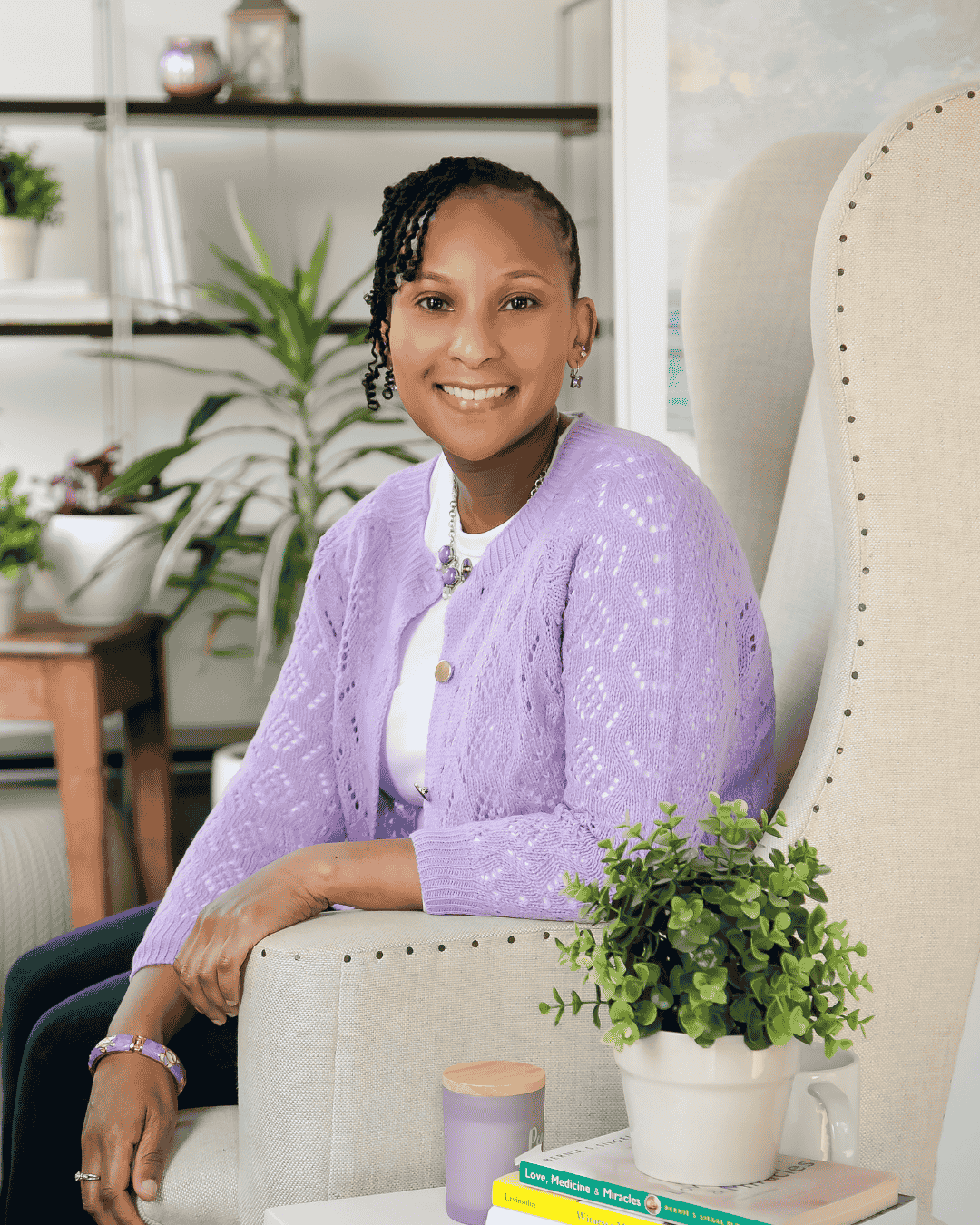
Founder, Cancer Doula, Cancer Thriver, Podcast Host
Imagine facing cancer with greater emotional strength, unwavering confidence, and the support needed to navigate the healthcare system effectively. Talaya Dendy is a seasoned 14-year cancer thriver and board-certified patient advocate. As a cancer doula, she offers empathetic, expertly informed support, guiding individuals and families through the emotional burdens and complex healthcare system of a cancer diagnosis. Talaya supports them in fostering resilience, providing tools to confidently advocate for their unique needs throughout their journey. She is also the host of 'Navigating Cancer TOGETHER,' a podcast sharing raw conversations and true stories on the hidden struggles, emotional rollercoasters, and quiet victories of a cancer journey. Talaya is a 2025 Bush Fellow, an AIR Media New Voices AMPLIFY ‘25 Fellow, and a 2025 Cancer Health 25 Patient Advocate.


